The American republic at 250: defying the cycles of history

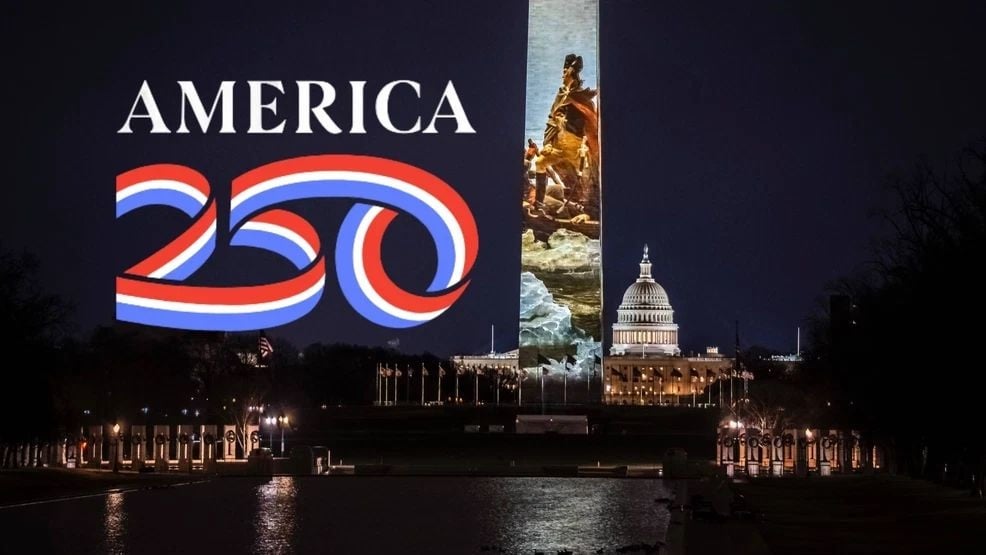
From a fragile confederation of former colonies to the world’s preeminent power, America has thrived where many predicted inevitable decline.
As a student of International Relations, I find this moment particularly apt for examining—and refuting—Sir John Bagot Glubb’s influential “Fate of Empires” theory, which posits that great powers follow a predictable lifecycle of roughly 250 years, ending in decadence and collapse.
Glubb Pasha, a British officer and amateur historian, outlined his thesis in his 1976 essay The Fate of Empires and Search for Survival.
Surveying empires from the Assyrians to the British, he identified a common pattern spanning about ten generations:
An Age of Pioneers (outburst), Conquests, Commerce, Affluence, Intellect, and finally Decadence.
Symptoms of the latter include defensiveness, pessimism, materialism, frivolity, an influx of foreigners, the welfare state, and a weakening of religion—all stemming from prolonged wealth, selfishness, and loss of duty.
The timing is uncanny: 1776 + 250 years = 2026.
Doomsayers have long applied Glubb’s model to America, suggesting we are entering terminal decline amid political polarization, cultural shifts, debt, and global competition.
Yet this deterministic view crumbles under scrutiny from IR theory, historical nuance, and America’s exceptional institutional design.
The Flaws in Glubb’s Framework
Glubb’s theory suffers from methodological cherry-picking and overgeneralization.
He selected empires that fit his narrative while ignoring or underemphasizing counterexamples.
His sample was limited; he admitted limited knowledge of China, India, and Latin America.
Many “empires” he analyzed were land-based autocracies or monarchies with centralized power vulnerable to internal rot or external conquest.
Republican or federal systems with mechanisms for renewal appear underrepresented.
Empires do not follow universal biological lifespans.
Historical duration varies wildly, the Roman Republic/Empire continuum lasted far longer than 250 years depending on demarcation, the Byzantine continuation extended it further.
The Ottoman Empire spanned over 600 years, Glubb’s average ignores how technological, economic, and institutional changes alter trajectories.
In the modern era, nuclear deterrence, global trade, and democratic accountability change the calculus of power entirely. Cycles exist—rise and relative decline are real—but they are not iron laws.
IR scholars like Paul Kennedy (The Rise and Fall of the Great Powers) highlight “imperial overstretch,” yet also note adaptive capacities.
America has repeatedly shed burdens (e.g., post-Vietnam, post-Cold War adjustments) while innovating.
Glubb’s decadence markers are culturally subjective and selectively applied.
“Influx of foreigners” and “welfare state” reflect mid-20th-century British anxieties more than timeless truths.
America’s strength has long derived from immigration, which replenishes labor, ideas, and dynamism—think Einstein, Musk, or waves of entrepreneurial talent.
Materialism and intellect? These fuel Silicon Valley’s edge over rivals. Frivolity coexists with profound civic vitality, from volunteerism to social movements that have driven renewal (abolition, civil rights, women’s suffrage).
Religion’s role evolves, America remains more religiously observant than secular Europe, with faith often reinforcing rather than undermining national purpose.
Critics rightly note Glubb’s pessimism mirrored Britain’s post-imperial malaise, his model risks confirmation bias, any society with challenges can be labeled “decadent.”
America’s Institutional Exceptionalism
The United States was founded on ideas that actively counteract Glubb’s decay.
The Constitution’s separation of powers, federalism, checks and balances, and amendment process enable self-correction unavailable to historical empires.
Periodic elections, an independent judiciary, and a free press—however imperfect—prevent entrenched decadence.
Madison’s vision in Federalist 10 anticipated factions but designed institutions to manage them.
Unlike Glubb’s conquest-oriented empires, America’s power rests on alliances (NATO, Indo-Pacific partnerships), economic leadership (the dollar, tech dominance), and soft power (culture, universities).
It is a “liberal hegemon” in IR terms—providing public goods like open seas and norms that benefit itself and others—rather than a extractive empire. This sustains legitimacy.
Even as China rises, America’s innovation ecosystem, energy independence, and demographic advantages (via immigration) position it for continued primacy, not inevitable fall.
History shows American renewal:
The post-Civil War industrialization, Progressive Era reforms, New Deal and WWII mobilization, post-1970s deregulation and tech boom.
Challenges like inequality or polarization are real but met with debate, elections, and state-level experimentation—federalism as a “laboratory of democracy.”
At 250, America is not rigid like aging autocracies but adaptable.
Republic, If You Can Keep It
Commemorating 250 years is no time for fatalism.
Glubb hoped awareness of patterns could help societies resist decline.
In that spirit, his theory offers warnings worth heeding—fiscal responsibility, civic duty, assimilation, and a balance between welfare and enterprise.
Yet America’s track record suggests we can transcend cycles through deliberate choice.
The Founders bet on Enlightenment reason, individual liberty, and republican virtue over dynastic fate.
That bet has paid off spectacularly, as we celebrate with fireworks, fairs, and reflection in 2026, let us reject cyclical determinism, the United States is not fated to follow Assyria or even Britain.
It is a constitutional republic sustained by its people’s agency, institutions, and founding principles.
In International Relations, power transitions are managed, not predestined. America at 250 stands as proof that well-designed polities can achieve longevity and renewal.
The next 250 years depend not on historical inevitability, but on our commitment to those principles.